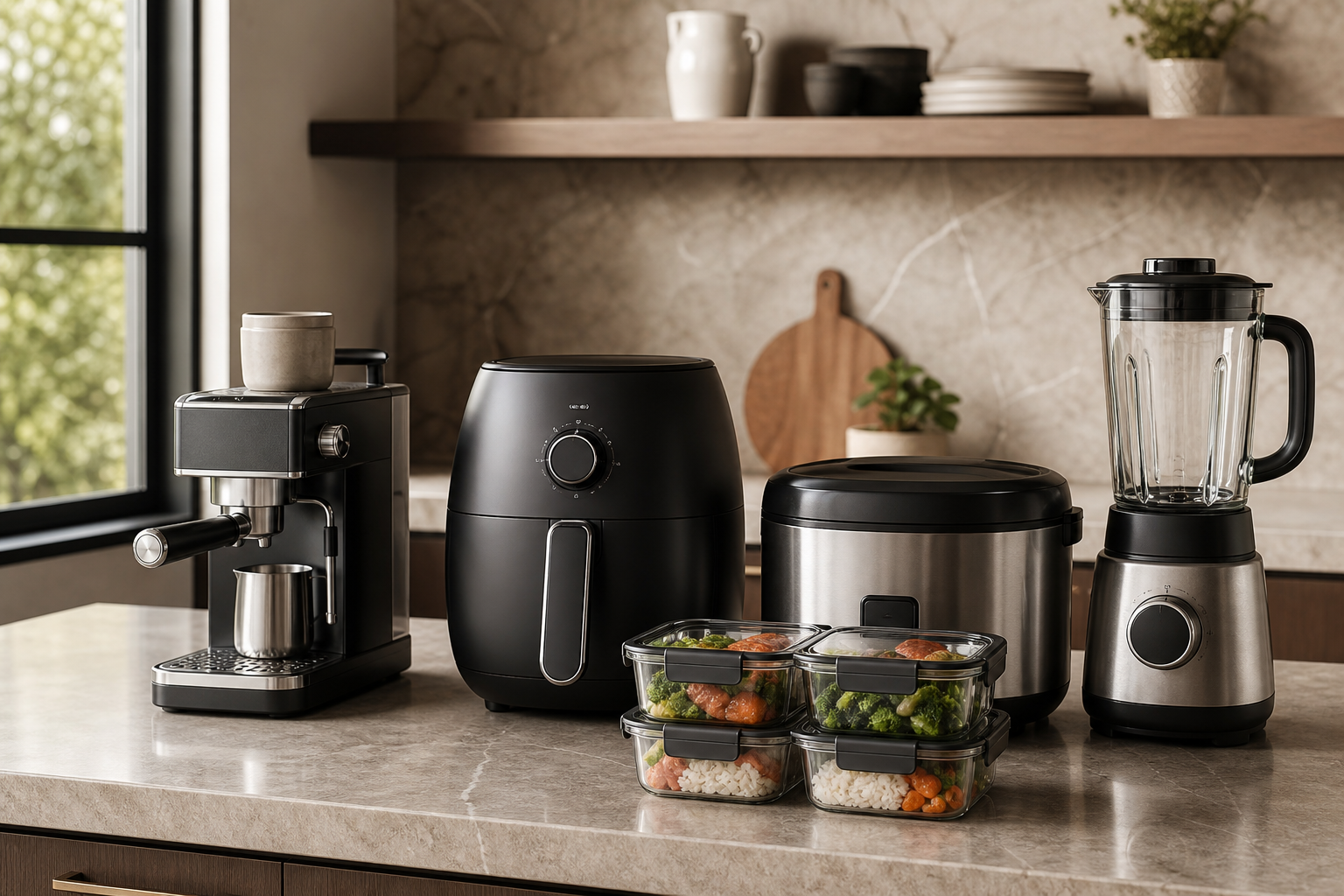
Start with footprint, not headline wattage
In a compact kitchen, the real decision is how much live counter space a product occupies once you account for lids, handles, cable clearance, and nearby prep room.
Keep only the appliances you reach for every day on the counter. Everything else should earn its place by folding away cleanly or stacking without blocking your workflow.
Check cleanup and consumables before features
The best small-space upgrade is usually the tool that stays easy to wash, dry, and restock after the novelty wears off.

- Count how many parts need hand washing after each use.
- Price the repeat buys: filters, gaskets, baskets, blades, and replacement lids.
- Prefer models with clearly available spare parts and warranty support.
Frequently asked questions
What should I compare first?
In a compact kitchen, it is usually smarter to compare footprint, cleanup effort, storage routine, and consumable costs before chasing extra power. Start with use frequency, dimensions, warranty, replacement parts, recent reviews, and the return policy before chasing the lowest price.
Should I check Amazon, Coupang, or AliExpress first?
Use Amazon and Coupang for fast delivery categories, then compare AliExpress for low-cost accessories, parts, and bundles.
Where should I confirm price and availability?
Prices, coupons, shipping times, and stock change often, so confirm the final details on the merchant page before buying.